


Humans for other humans
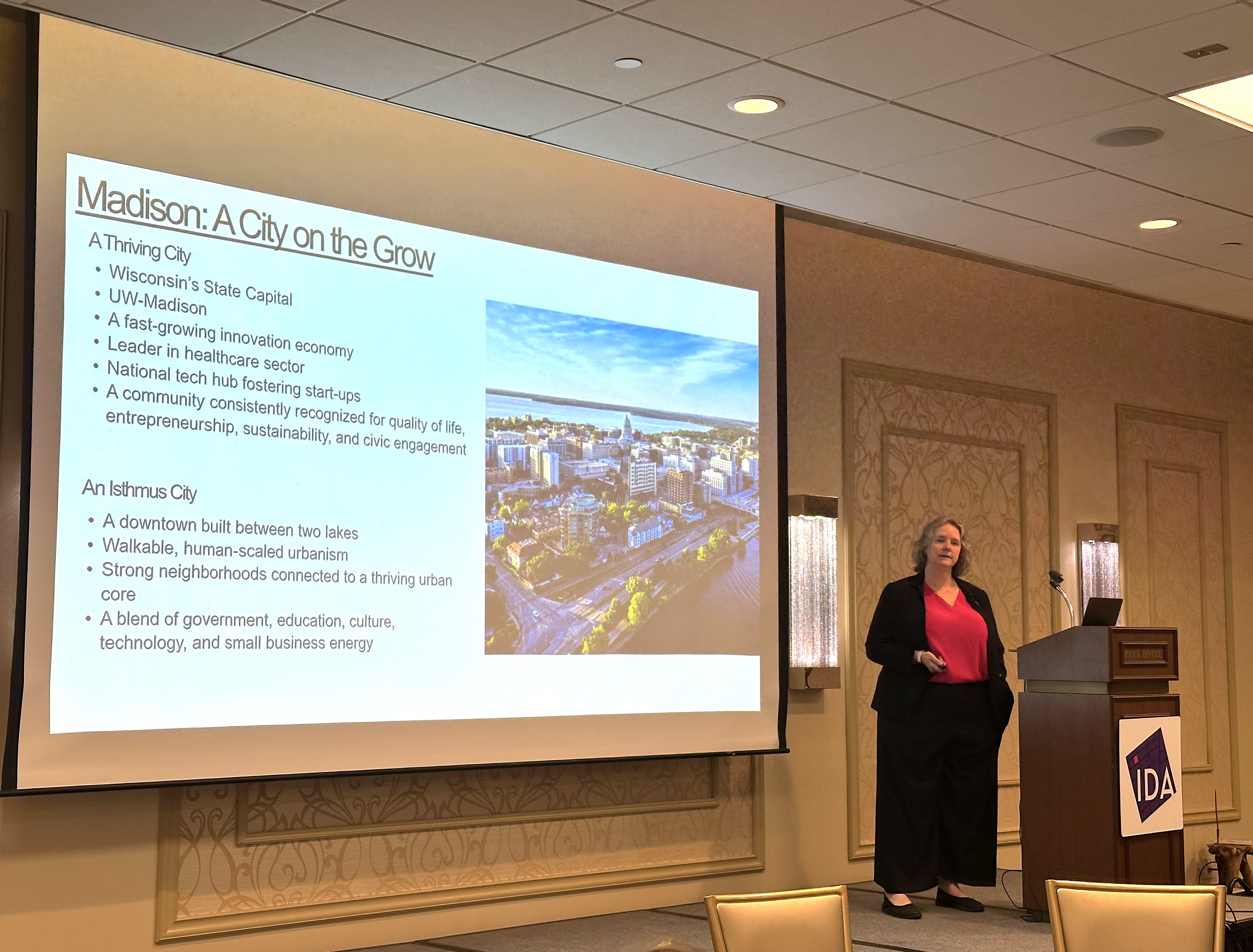
Ishmael Nuñez recently returned from the International Downtown Association (IDA) Conference in Madison, Wisconsin, where the host city was not just a backdrop, but a living case study.
The city's downtown occupies a narrow strip of land between two lakes—making it one of two cities on an isthmus in the country. The other city with this claim to fame is our own Seattle.
"Madison is really impressive as a place," said Ishmael, describing the environment as "a mix of what I would describe as serendipitous, but also there’s been care and attention to embracing the natural landscape." This intentional design, anchored by the State Capitol in the center and the university on the west, creates a natural pull that draws people in. Local leadership has ensured that downtown remains a walkable, vibrant, and highly communal space. When we think about creating intentional neighborhoods and creative approaches to problem solving, we can learn a lot from small to mid-size cities like Madison.
In delivering the keynote, the Mayor of Madison, Satya Rhodes-Conway, a self-proclaimed "city nerd", emphasized the idea that progress depends entirely on real human collaboration, consensus-building, and meaningful human connection.In an era where technology often dominates the conversation, this gathering took a refreshing approach."I am seeing an evolution and deepening in the IDA space, where the prioritization of being together as humans elevates our time and attention over tools and technologies that will algorithmize our most innate desire for connectivity, belonging, and collaboration.
"It’s always been about people—the people you grow up next to, work next to, and see. If we’re not making the effort to be among people and recognize that we can work together, then we’re not actually going to accomplish anything," he said. Ishmael serves as a Board member of IDA
